
AI and cloud workloads are fundamentally reshaping data center design. Large-scale AI training, distributed inference, and cloud-native services depend on massive, synchronized data movement across accelerators, CPUs, memory, and storage.
As these systems scale, the switching fabric becomes a primary determinant of performance, efficiency, and cost.
Marvell delivers scalable switching solutions through its Teralynx® Ethernet switch silicon portfolio, enabling high-radix, low-latency AI fabrics optimized for 400G, 800G, 1.6T, and next generation 3.2T AI deployments. Combined with Marvell industry-leading Ethernet PHY solutions, PAM4 optical DSP platforms, coherent DSP technologies, silicon photonics innovation, and advanced connectivity architectures, Teralynx switching platforms serve as the backbone of end-to-end AI connectivity across scale-up and scale-out infrastructure.

Scalable switching architectures enable AI fabrics to efficiently move large volumes of data between accelerators, memory resources, and network domains while maintaining low latency, high bandwidth density, and predictable performance as infrastructure scales from rack-scale systems to large distributed AI clusters.
Marvell delivers scalable switching solutions through its Teralynx® Ethernet switch silicon portfolio, enabling high-radix, low-latency AI fabrics optimized for 400G, 800G, 1.6T, and next generation 3.2T AI deployments. Combined with Marvell industry-leading Ethernet PHY solutions, PAM4 optical DSP platforms, coherent DSP technologies, silicon photonics innovation, and advanced connectivity architectures, Teralynx switching platforms serve as the backbone of end-to-end AI connectivity across scale-up and scale-out infrastructure.
At 400G, 800G, 1.6T, and next generation 3.2T:
Marvell Teralynx® switching platforms are engineered to deliver high radix, deterministic latency, and efficient bandwidth scaling—ensuring that compute performance translates into real-world AI system gains.
These switching platforms are part of the broader Marvell end-to-end connectivity portfolio spanning optical, electrical, and co-packaged technologies across all AI scaling architectures.
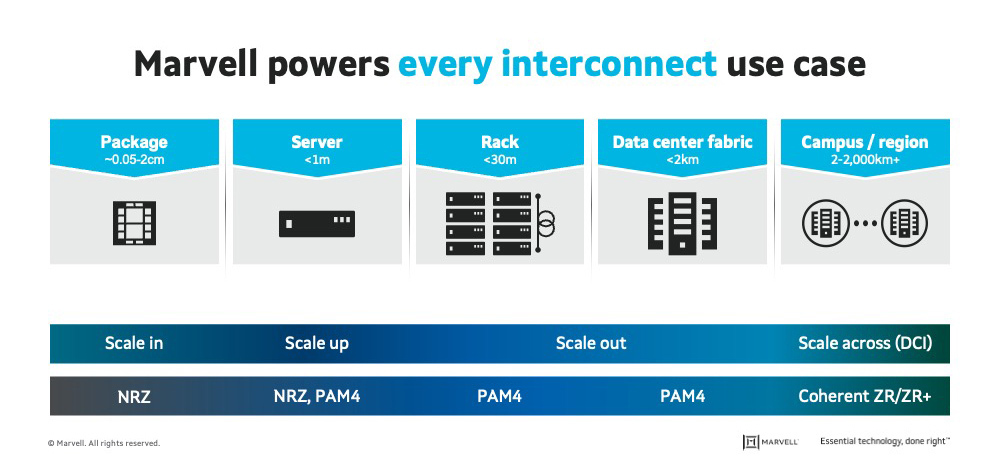 Scalable switching platforms connect compute, memory, and storage across AI and cloud architectures
A scalable switching platform integrates high-performance switch silicon, system architecture awareness, and seamless interoperability with optical and electrical interconnect.
Marvell switching capabilities include:
Teralynx® switch silicon is optimized for AI fabrics where predictable performance and bandwidth density are paramount.
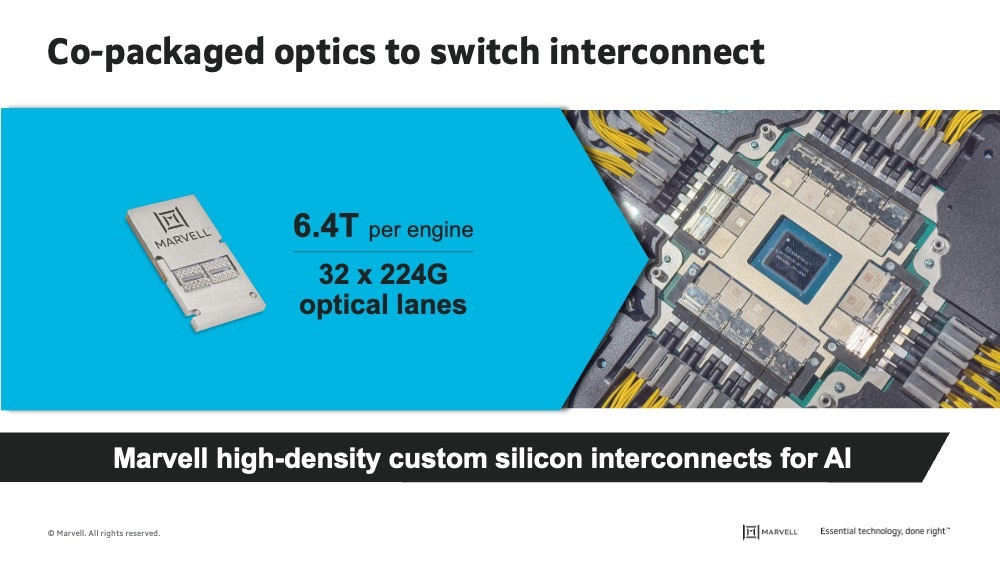 High-radix switching reduces network complexity while enabling AI-scale fabrics
Selecting a switching platform for AI and cloud workloads requires a system-level evaluation across multiple domains.
Port Speed Transitions
Moving from 400G to 800G, 1.6T, and next generation 3.2T increases bandwidth density but also amplifies:
Switch silicon must balance performance scaling with power efficiency.
Fabric Topology and Radix
Higher radix switching reduces the number of fabric tiers, which:
Teralynx® high-radix architecture supports flatter network designs optimized for AI-scale fabrics.
Optical Integration Strategy
As electrical reach limits are approached, architects must determine:
Marvell integration of switching silicon with PAM4 DSP and coherent platforms enables flexible optical strategies across scale tiers.
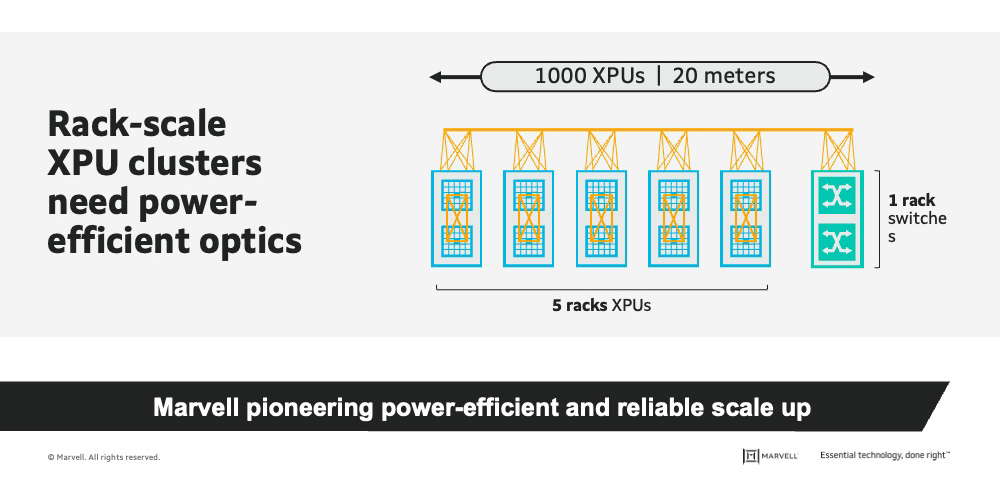 Scalable switching platforms enable predictable performance as AI and cloud infrastructure grows.
Power and Thermal Budgets
At AI cluster scale, incremental power inefficiencies multiply across thousands of ports. Efficient switching silicon and optimized optical integration reduce total cost of ownership.
Long-Term Scalability
Switching decisions must account for:
The Marvell portfolio supports forward scalability across electrical and optical domains.
Scalable switching platforms are deployed across diverse AI and cloud environments.
Large-Scale AI Training Clusters
Teralynx® switching platforms support predictable performance at AI training scale.
Distributed Inference Fabrics
High-speed switching ensures inference clusters maintain responsiveness under load.
Hyperscale Cloud Data Centers
Integration with coherent DSP platforms and COLORZ® modules enables seamless DCI expansion.
AI Infrastructure Spanning Campuses and Regions
Marvell switching platforms integrate with coherent DSP technologies to extend AI fabrics beyond a single facility.
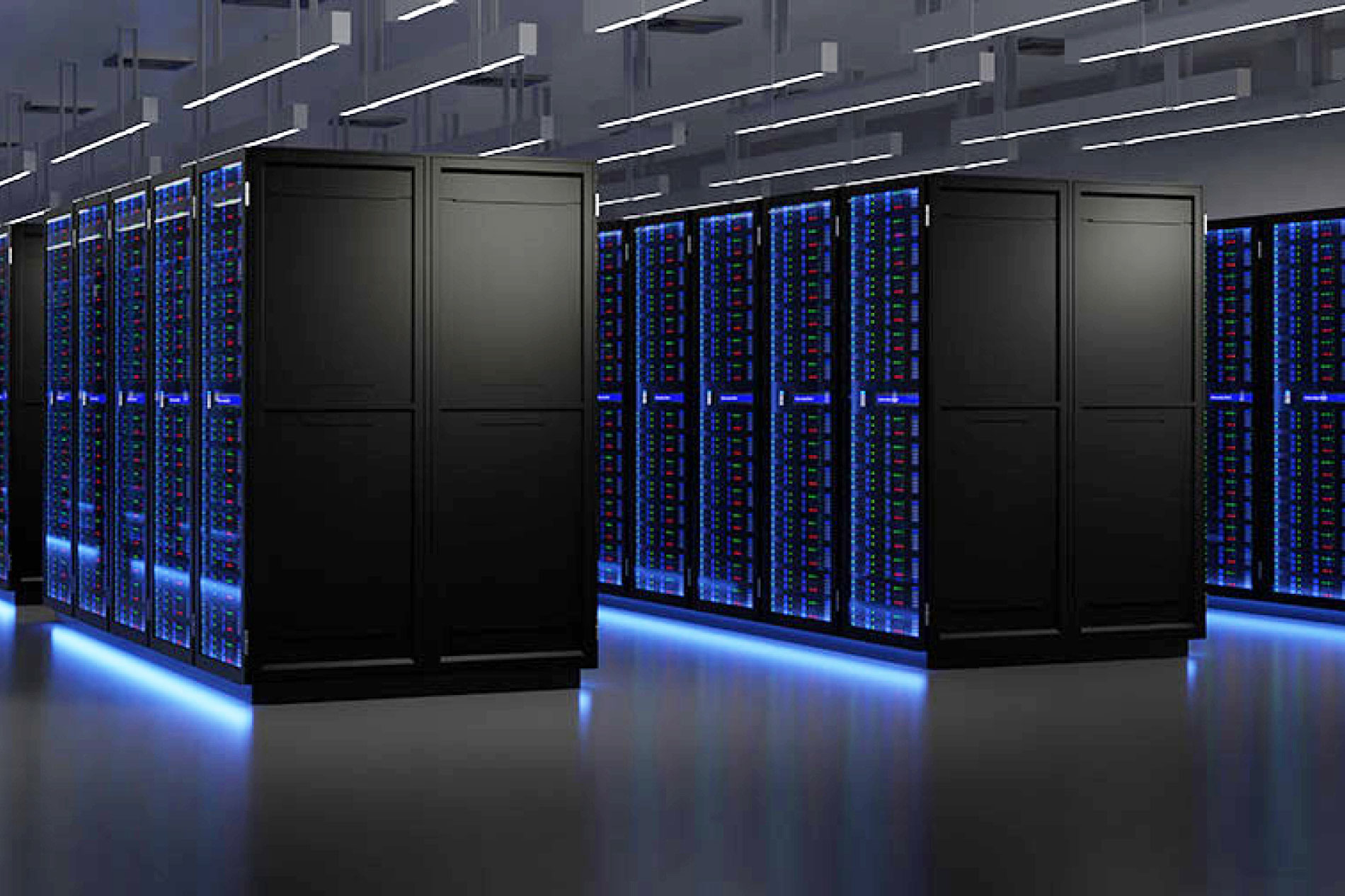

AI workloads rely on synchronized communication across thousands of accelerators, memory resources, and network endpoints operating within large-scale AI fabrics. Scalable switching platforms provide the high-radix, low-latency connectivity required to efficiently move massive volumes of data across scale-up and scale-out architectures while maintaining predictable performance, congestion control, bandwidth efficiency, and system scalability.
AI workloads rely on synchronized communication across thousands of accelerators, memory resources, and network endpoints operating within large-scale AI fabrics. Scalable switching platforms provide the high-radix, low-latency connectivity required to efficiently move massive volumes of data across scale-up and scale-out architectures while optimizing bandwidth density, power efficiency, congestion management, and predictable system performance as AI infrastructure scales.
Marvell optical connectivity solutions support a broad range of AI infrastructure deployments spanning short-reach, high-bandwidth scale-up and scale-out fabrics to long-reach scale-across data center interconnect applications. PAM4 optical DSP platforms enable high-density, low-latency connectivity across servers, racks, and AI clusters operating at 400G, 800G, 1.6T, and emerging nextgeneration 3.2T speeds. For campus, metro, and regional AI infrastructure connectivity, Marvell coherent DSP platforms and COLORZ® ZR/ZR+ pluggable modules enable secure, high-capacity optical transport across distances ranging from tens to thousands of kilometers while maintaining power efficiency and interoperability at scale.
Yes. High-radix Ethernet switching supports latency-sensitive AI workloads and multi-tenant cloud environments within unified architectures.
We believe better partnerships help to build better technologies. Let’s connect and see what we can design together!
We will be in touch with you soon!


